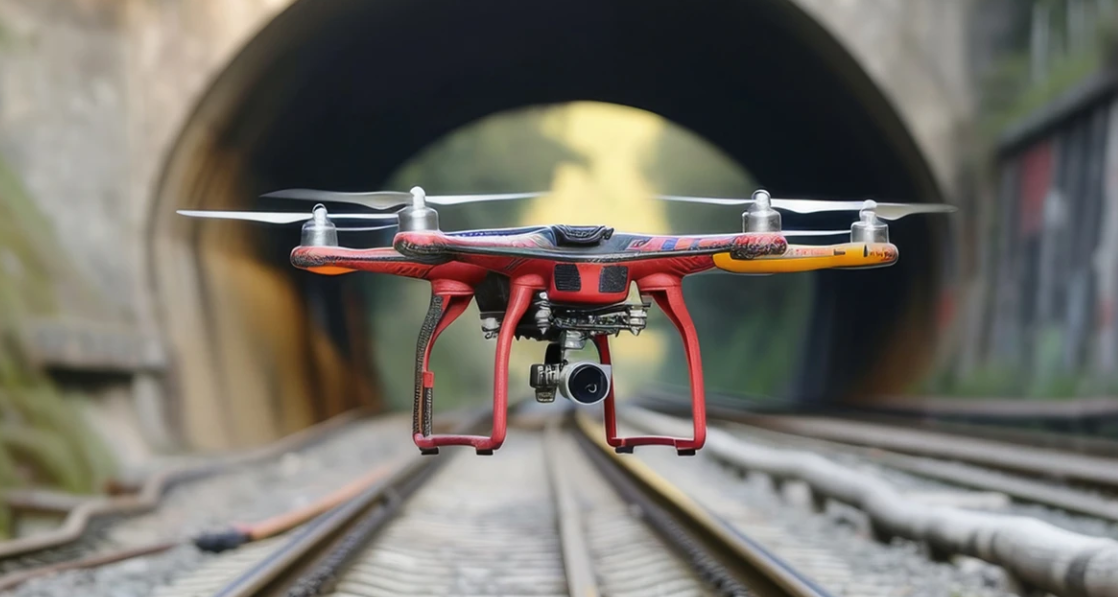
42 Technology (42T), part of British Engines, has helped Omnisense tackle one of the biggest challenges in drone operations — how to land safely when satellite signals can’t be trusted.
The Problem
Drones rely heavily on satellite navigation, but in the real world those signals are not always reliable. They can be blocked, reflected or disrupted in places like city centres, ports or enclosed spaces. When that happens, maintaining control during landing – one of the most critical phases of any flight – becomes much harder.
Omnisense, through its European Space Agency-supported DroneHome programme, set out to address this challenge.
The Solution
Working in collaboration with Omnisense, 42T helped develop a practical solution designed to perform in real-world conditions, not just in theory.
Instead of relying solely on satellites, the system uses ground-based radio positioning (Ultra-Wideband, or UWB) to provide an additional layer of navigation. This allows the drone to maintain an accurate understanding of its position, even when satellite signals are weak or unavailable, enabling a controlled and predictable landing.
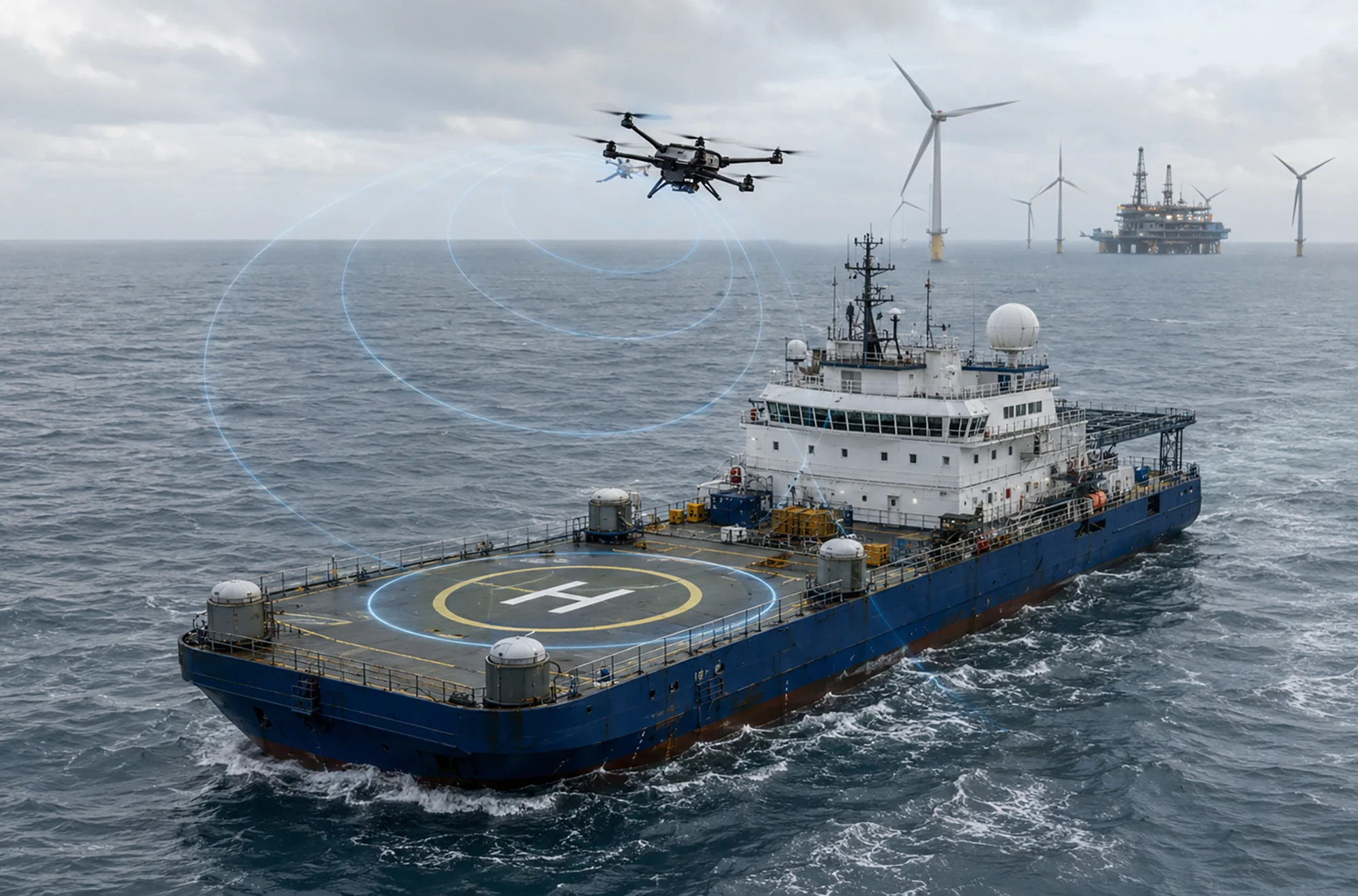
Photo: This AI-generated image shows a drone using radio positioning as a complementary navigation layer so its position remains stable and predictable for safer autonomous landing.
The Challenge
A key challenge was range. For UWB to be effective in real-world operations, it needed to work over greater distances than standard systems allow. 42T worked closely with Omnisense to design and develop new Radio Frequency hardware for both the drone and ground infrastructure, combining amplification, switching and antenna design into a single, high-performance solution.
Testing showed the system could maintain stable positioning even when satellite signals were degraded, allowing drones to approach and land reliably.
Paul Bearpark, Head of Electronics and Software at 42T, said:
“We were delighted to support Omnisense in delivering its ground-breaking DroneHome project. GNSS underpins many of today’s critical systems, so developing a terrestrial positioning technology for more reliable autonomous operations in challenging environments is a major advance for drone safety.
“Satellite navigation is fundamental to many systems, but it isn’t always dependable. This project was about finding a practical way to add resilience so autonomous systems can continue to operate safely when those signals are compromised.
“The approach has potential far beyond drones, with applications across maritime, land-based and infrastructure operations, where reliable positioning is critical and satellite signals alone are not enough.”
This project is another example of how British Engines companies are designing practical solutions to real-world challenges, applying engineering expertise and innovation to improve safety, reliability and performance in environments where it matters most.